A Bike Tour in Bogotá
When it rains it pours

People talk a lot of shit about Bogotá. It’s rainy. It’s grey. It’s cold. A Bogotano in Mexico City told me, “Don’t go there. It sucks.” I was almost going to skip it entirely.
Arriving in this city of 8 million, it surprised me how familiar it felt. It reminded me of New York or São Paolo. My first day here I went to the gym, bought groceries, and watched Netflix–after two weeks on a bunk bed in the mountains, this was a religious experience.
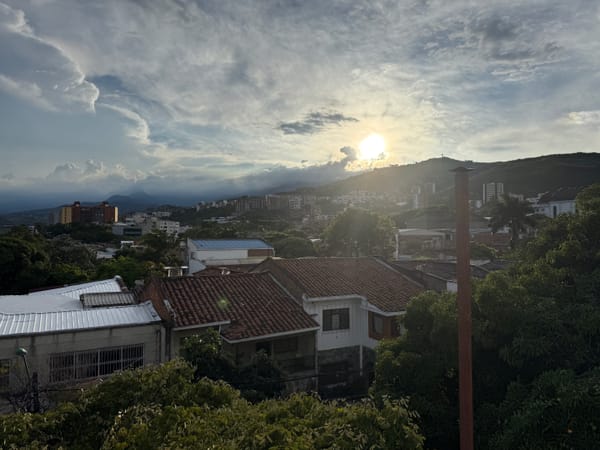
Bogotá has an insane geography. As we flew in, it didn’t feel like the plane was getting lower, rather that the ground was getting higher. We followed the eastern ridge of the Andes, green jagged peaks serrating the landscape, then suddenly, there was a clearing–a plateau carved out of the mountains with miles and miles of greenhouses (the surroundings of Bogotá are famous for growing flowers). The mountains surrounding the city are imposing. Depending on the angle, the sun may set a full hour earlier if you’re in the shadow of a particularly tall ridge. At 2700m (8,530ft) above sea level it’s one of the highest major cities on earth.
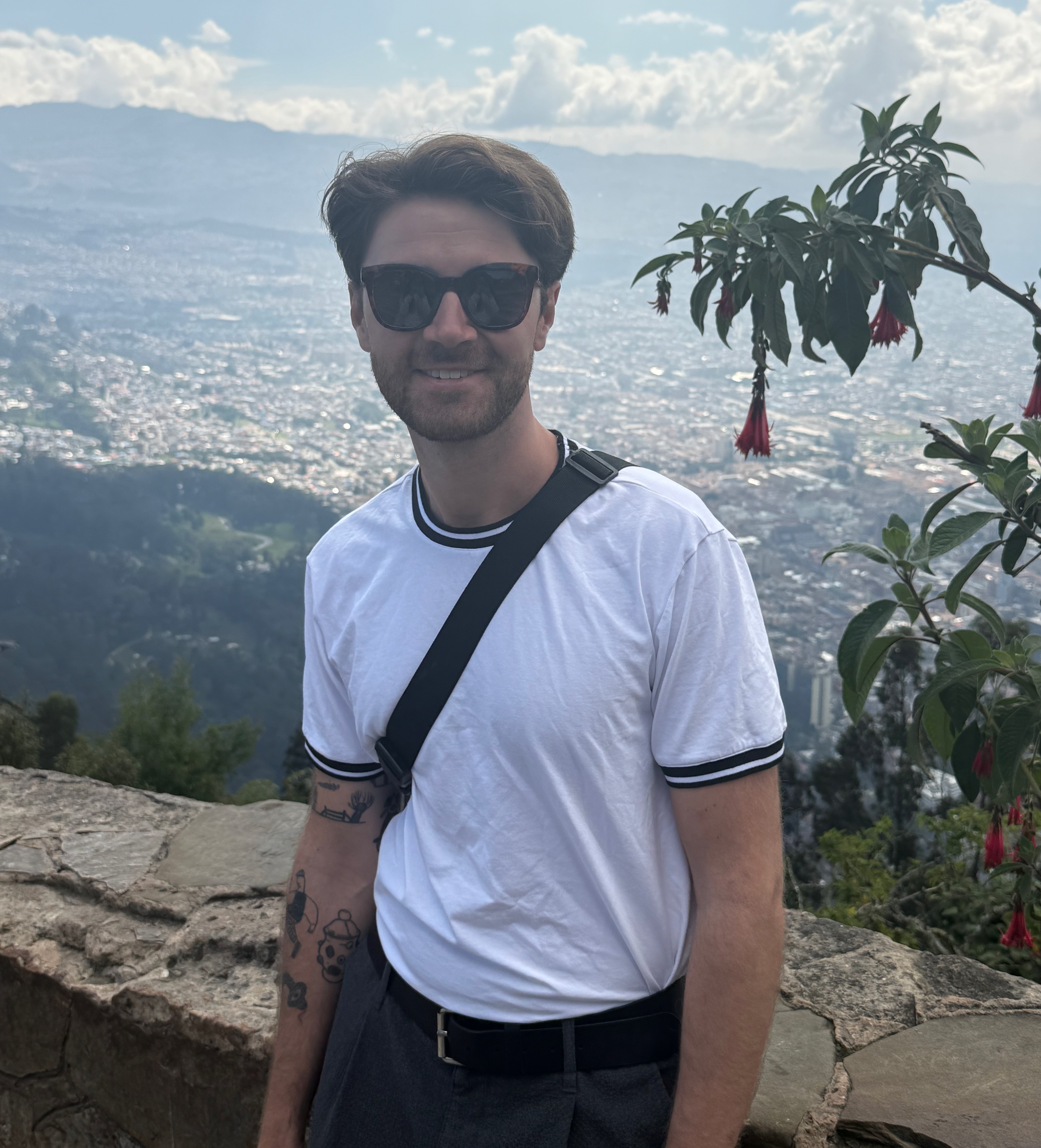
The second morning, Eric and I signed up for a bike tour. As we Ubered through Bogotá’s brutal morning traffic (there is no subway system), we saw a few rain clouds in the distance. We arrived in Candelaria, the old town neighborhood in the south of the city around 10am and set off with the other tourists. Quickly our tour was segmented into two groups, one English speaking and the other Spanish.
The Spanish speaking group got a seemingly normal tour guide. He was mid-20s and smiley–a Rolo who had spent his entire life in Bogotá.
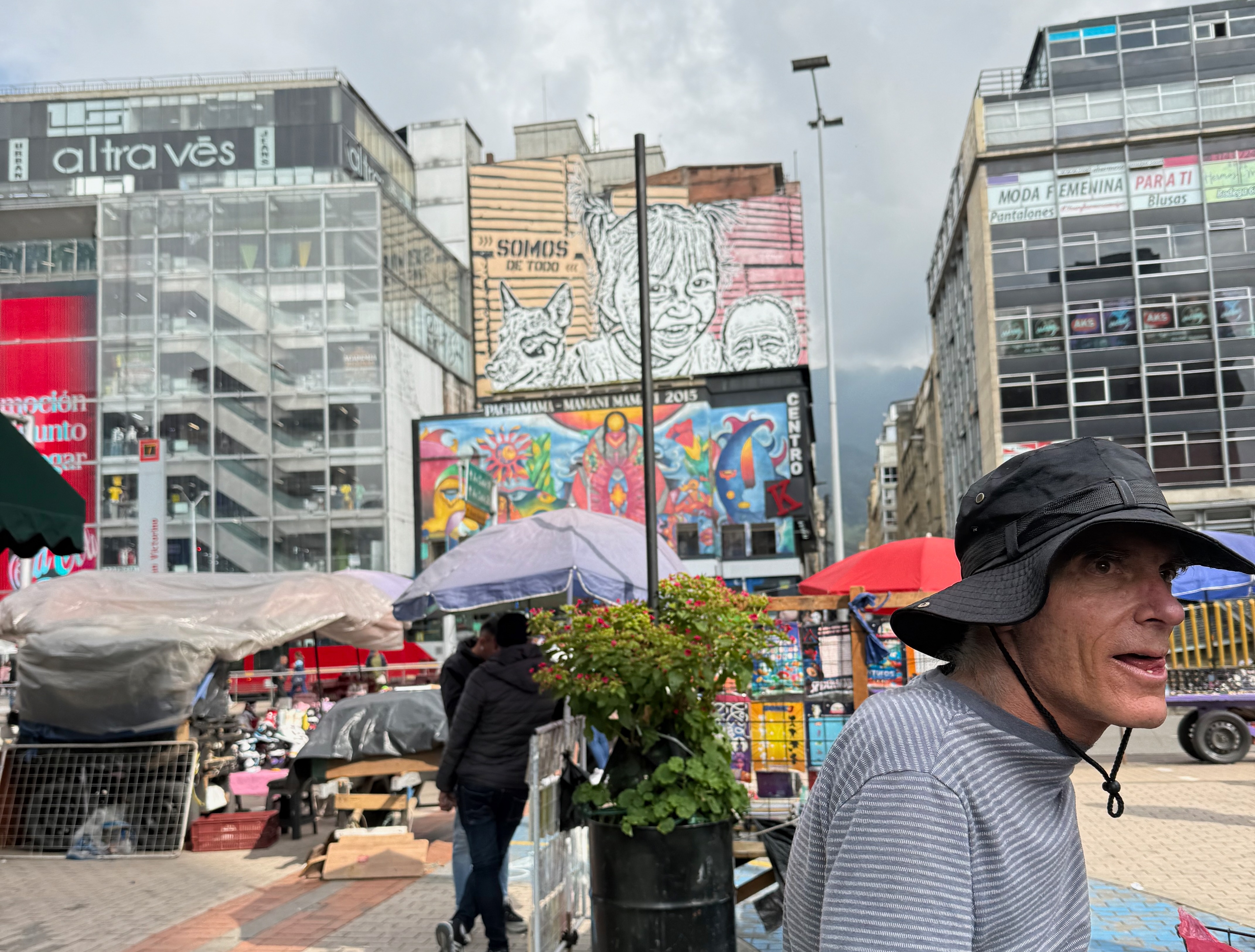
The English tour guide was Pete–a 70 year old American expat from California who has been living in Bogotá for the past 20 years. Pete is tall, lanky, and gargoyle-esque, like a cross between the grandfather from Hey Arnold and the deformed hand guy from Scary Movie. He’s got a few sizeable boils on his face and a bald head covered by a floppy bucket hat. Down his neck runs a mane of finger-length white hair, pouring into a cheap cotton sweatshirt. What teeth he has are covered in a yellow-brownish film and there’s visible debris filling in the gaps. Over his sweater is a trash-bag poncho.
Pete is a weird bloke. He moves with a singleminded focus, oblivious to details around him and unaware of the dependent tourists (us) he tows behind. When we reach busy intersections, he weaves between motorcycles and semi trucks, always pedaling on, rarely checking to see if we’ve caught up.
This is our tour guide.
Amongst us tourists, there’s a tangible social dynamic. In between lectures, you strike up conversations with other travelers, shoot the shit and share notes. It’s half the fun.
Eric and I quickly formed an alliance with two other solo travelers, Sarah and Tom. Tom is from Australia, a fellow job-quitter, and on his first few days of a loosely sketched six month trip through South America.
Sarah is a curly-haired sporty girl with thick glasses who works for the German government. Though she grew up in France she feels more German these days. As a European with access to a humane vacation policy, she is taking 6 weeks off from her job to travel around South America. Little does the German government know, she will quit as soon as she gets back.
She is one of the many people I’ve met on this trip doing something called a “sabbatical” — an alien concept in which your job gives you multiple months off, but allows you to come back. In America, you just quit.
As we began our ride, Pete pointed out a brick building where they held political prisoners in the 90s. Many people were killed and tortured here, we learned. Today, it’s called the Candelaria Lofts, written in sleek serif letters across the frosted glass doors. We looked over and saw a food delivery guy pressing the buzzer, waiting for the doorman to let him in.
We continued along to Plaza Bolívar, Bogotá’s main square. We paused in front of the Palacio de Justicia, the Colombian Supreme Court. In 1984 the building was totally destroyed as left-wing communist guerrillas (M19) stormed the palace and took over 300 hostages. They had a shootout with the Colombian military involving multiple tanks, a swat team rappelling in through a hole in the roof, and a massive fire that took almost a hundred lives. Also lost in the fire were key documents containing damning evidence against Pablo Escobar. M19, Escobar, and the military were apparently all in on the ordeal, and there were multiple hostages who were filmed leaving the building alive, but were never heard from again. Insanely, the current president of Colombia, Gustavo Petro, was an active member of this same M19 guerrilla force.
We continued on as storm clouds began to close in. It dropped a few degrees. Suddenly there was a heavy, moist silence in the air.
There was no doubt. It was about to shit down upon us.
As we passed the house of Betty La Fea, an absolutely torrential downpour began. The sky darkened to a deep graphite and heavy raindrops pelted us from above. My thick cotton Wranglers stood no chance. After two minutes, I was soaked to the bone.
We rode through ankle-deep puddles. As you spun through them, your back wheel kicked a cold stream of water into your asshole. The Bogotá Bath.
Pete continued the tour unperturbed. He crossed a busy avenue and abruptly paused to show us some graffiti. We cowered in our ponchos, rain jackets fully zipped up.
Pointing at a mural, Pete mumbled, “This is another piece from La Erre. She’s one of Bogotá’s most important feminist graffiti artists.”
I tried to make an appropriate facial expression as my shoe hovered over a small ocean of rainwater. I felt my Wranglers grow heavier as they sucked in the smoggy urban precipitation. Pete gave us a sly smile from underneath his bucket hat, rainwater dripping over the boil on his cheek.
“How far away is the coffee shop?” I asked.
Without looking at us, Pete responded, “Maybe 15 minutes” and confidently whipped his bike into oncoming traffic. We scrambled to follow.
We pedaled through Noah’s Flood for the next 30 minutes, winding through backstreets, dodging traffic, trying to keep up with our renegade tour guide. Pete stopped at the main cemetery to relate an anecdote in a barely audible voice about something I couldn’t quite muster the patience to care about. I felt my pruney hands on the handlebars; heard my squishy denim against the seat.
We cycled on.
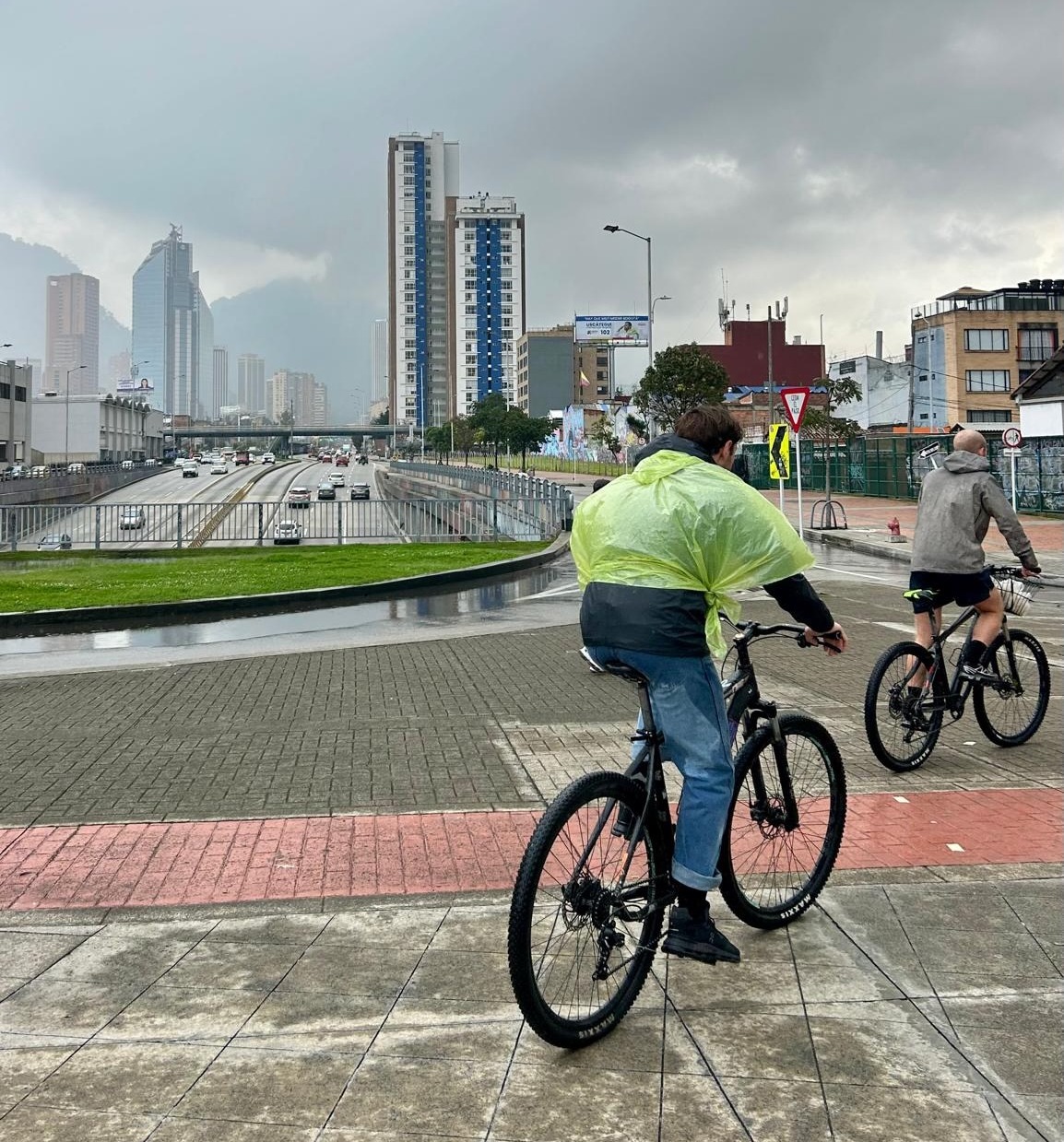
At a low-rise brick apartment block, we stopped and formed a semi-circle, awaiting Pete’s insight. As if possessed, he moved his jaw as if chewing on an imaginary straw, pointing to scribbles on the wall.
“Look there. See it says ACAB? Anybody know what that means?”
“All Cops Are Bastards,” I say, wanting it to end.
Pete grins, he’s got us just where he wants us.
“Well… let me tell you a little story. OK? Justin Bieber he comes to Bogotá, a few years ago. He sees the graffiti. He wants to get involved. OK? The police. They escort him, two SUVs behind him. OK? Mr. Bieber, he gets out of the car. He’s got a spray can. He spray paints a Canadian Flag on this wall here. But in the center, can you guess what there is?”
“A Maple Leaf,” I say.
“A Marijuana leaf,” says Pete through a candy-toothed smile.
“The next day the graffiti was gone. Someone paints over it. OK. This is Bogotá. Lot of graffiti. Lot of people.”
We nod.
“So, I’ll give you another shot. ACAB. What does it mean?”
Silence.
“All Colombians Are Beliebers.”
And in some otherworldly moment of choreography, Raúl, the bike mechanic, whips out a Bluetooth speaker and we hear the first notes of “Baby” by Justin Bieber.
Baby, Baby, Baby, oooh!
The rain settles for a moment.
Pete looks at me with a sort of “gotcha” smirk and goes for a fist pound. His knuckles meet mine with an icy thud.
We cycled on.
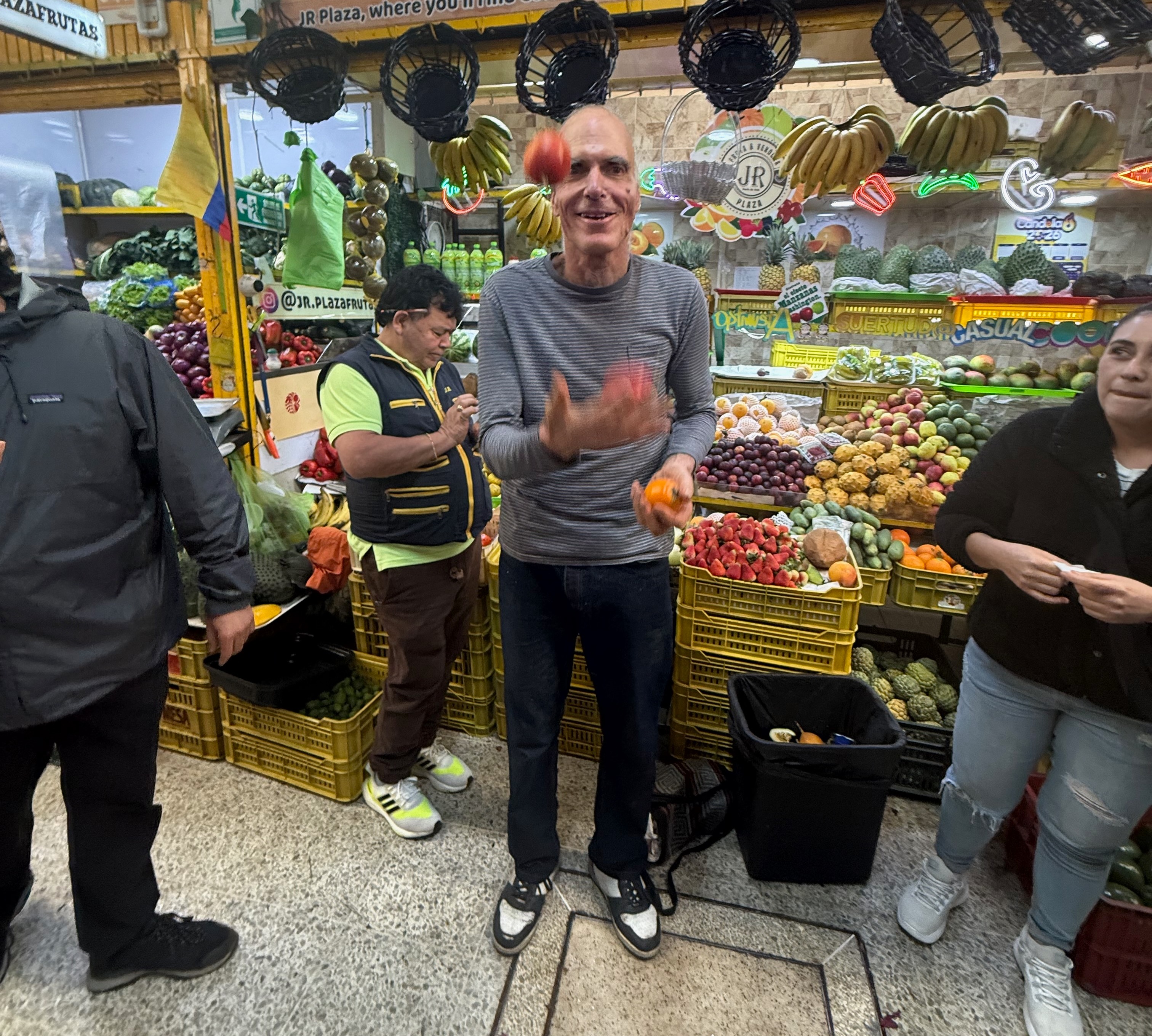
The rain eased up as we rode and finally we arrived at a fruit market. After the damp grey streets, the market was a colorful, clean oasis. Inside there were hundreds of stalls that sold various arrangements of exotic fruits. There were avocados, cucumber melons, passionfruits, and others beyond my perception.
Pete led us inside. He did not speak to anyone, but approached seemingly random stalls and began plucking out various objects without concern. He grabbed a melon-sized mango, brandished a switchblade, and began to slice the fruit towards his thumb, without looking.
Once the fruit was severed, he offered us the mango slices, pinched between his knife and finger. I saw his hands were smudged, a fine layer of dirt coated his fingernails and soot covered his palms. He butchered untold amounts of fruit, offering us sticky slices. I checked my fruit for blood more than once.
We downed mouthfuls of fruit. Sweet. Sour. Strange. After each piece, my hands would accumulate more debris. I felt them growing stickier and stickier. Sarah turned to me, “Wow! You really got a lot of fruit on you!”
After about the fifteenth fruit, two girls covertly pulled out a packet of napkins. I looked on, envious, afraid to ask.
We transitioned from the sweet fruit station to the sour station and Pete opened up a passionfruit-like entity, with brainy seeds and white meat. It tasted like blue cheese.
The owner of the fruit stall saw me with my puckered mouth and started laughing. “Jaja, mira, ácido! Ácido!” He imitated my scrunched up lips and let out a deep belly laugh.
As we left the fruit market, we saw the other tour group, the long-lost Spanish speakers, led by their extremely normal tour guide. All 10 of them were smiling.
Something was off. They had no ponchos. Their hoods were down. Their jackets weren’t zipped. In fact, all of their clothes seemed perfectly dry.
One of them looks at me, puzzled, as I stood there in my muck-soaked Wranglers.
“Did it rain for you guys?”
Reading: Primero Estaba El Mar by Tomás Gonzaléz
Watching: Small Brained American travel vlogs on YouTube
Listening to: Still the New Choker album (listen)
Items Lost: Kindle (ojalá, anew one arriving in Medellín on Wednesday)
Key Stops: Mexico City, Oaxaca, Puerto Escondido, Mazunte, Eje Cafetero, Cali, Bogotá
Next Up: Medellín, Buenos Aires